Ute & Tradie Vehicle Detailing: A Practical Guide for Western Sydney Tradies
Macarthur has no shortage of tradies, and a work ute or van gets used completely differently to a regular daily driver. It's a tool as much as it is a vehicle, which means the detailing approach that makes sense for it is different too - less about showroom polish, more about keeping it functional, presentable to clients, and not falling apart from the inside out.
Why Trade Vehicles Wear Differently
A work vehicle deals with a specific combination of grime that a normal car rarely sees: cement dust, plaster splatter, tool grease, diesel residue on the tray, and general job-site mud and dust tracked in on boots. Add in the fact that it's often loaded and unloaded daily, and wear shows up faster in specific spots - driver's seat bolster, door sills, tray edges, and floor mats especially.
What Actually Matters for a Work Vehicle
The goal usually isn't a show-car finish - it's keeping the vehicle hygienic to sit in for a full workday, presentable enough to pull up at a client's house without looking like it's falling apart, and protected enough that grime doesn't start eating into the interior trims and exterior paint over time.
Interior Priorities for a Vehicle You Live In
- Seat and carpet cleaning - removing the embedded job-site dust and grime that builds into the fabric weave over weeks, not just surface dust
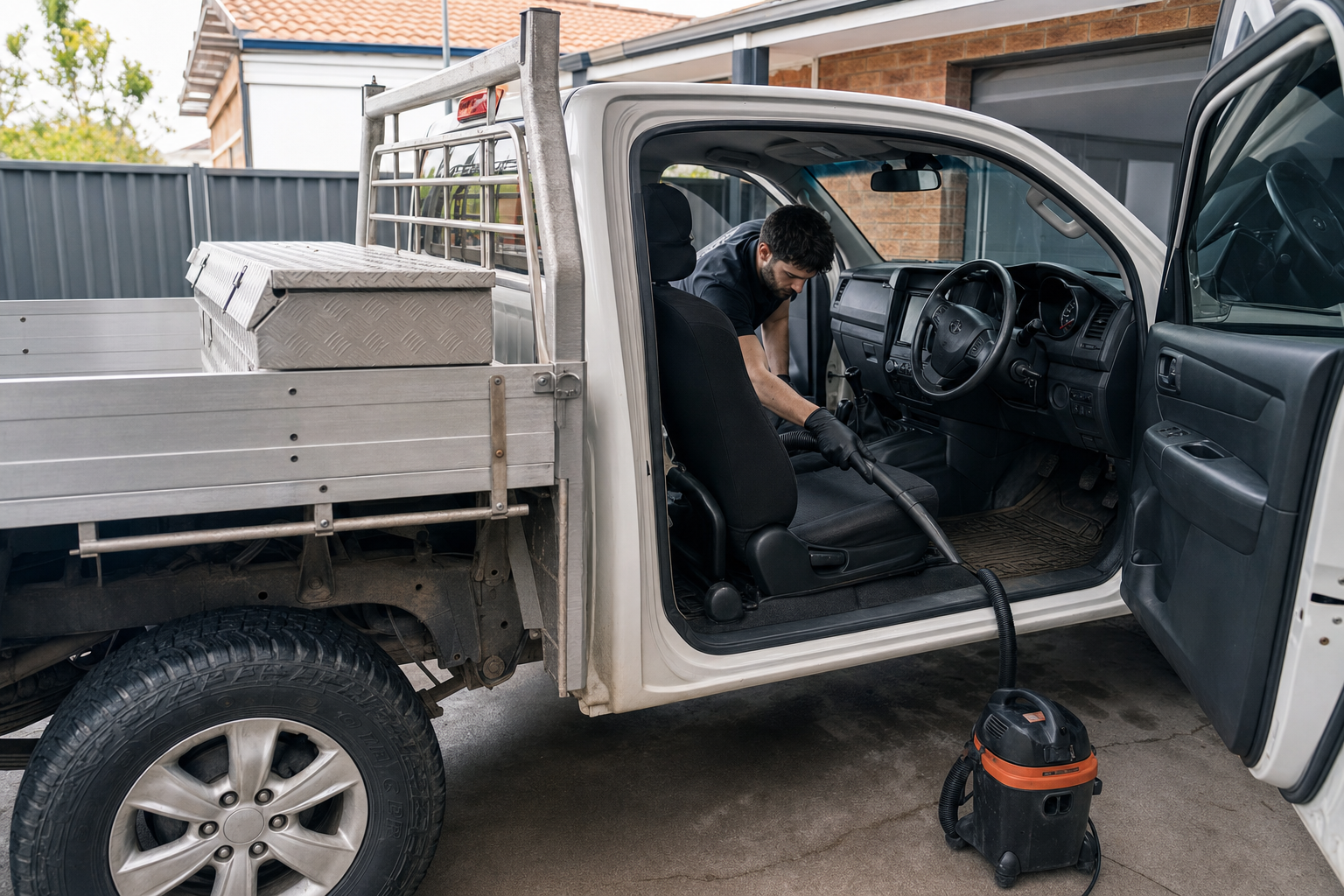
- Floor and footwell vacuum - this is usually where the bulk of the grit and dust collects, and it's abrasive enough to wear through carpet backing over time if left
- Door pockets and console - tools, receipts, and general clutter tend to hide a layer of dust underneath
- Odour control - diesel, sweat, and general job-site smells build up in a cab that's used all day, every day
Protecting the Tray and Exterior
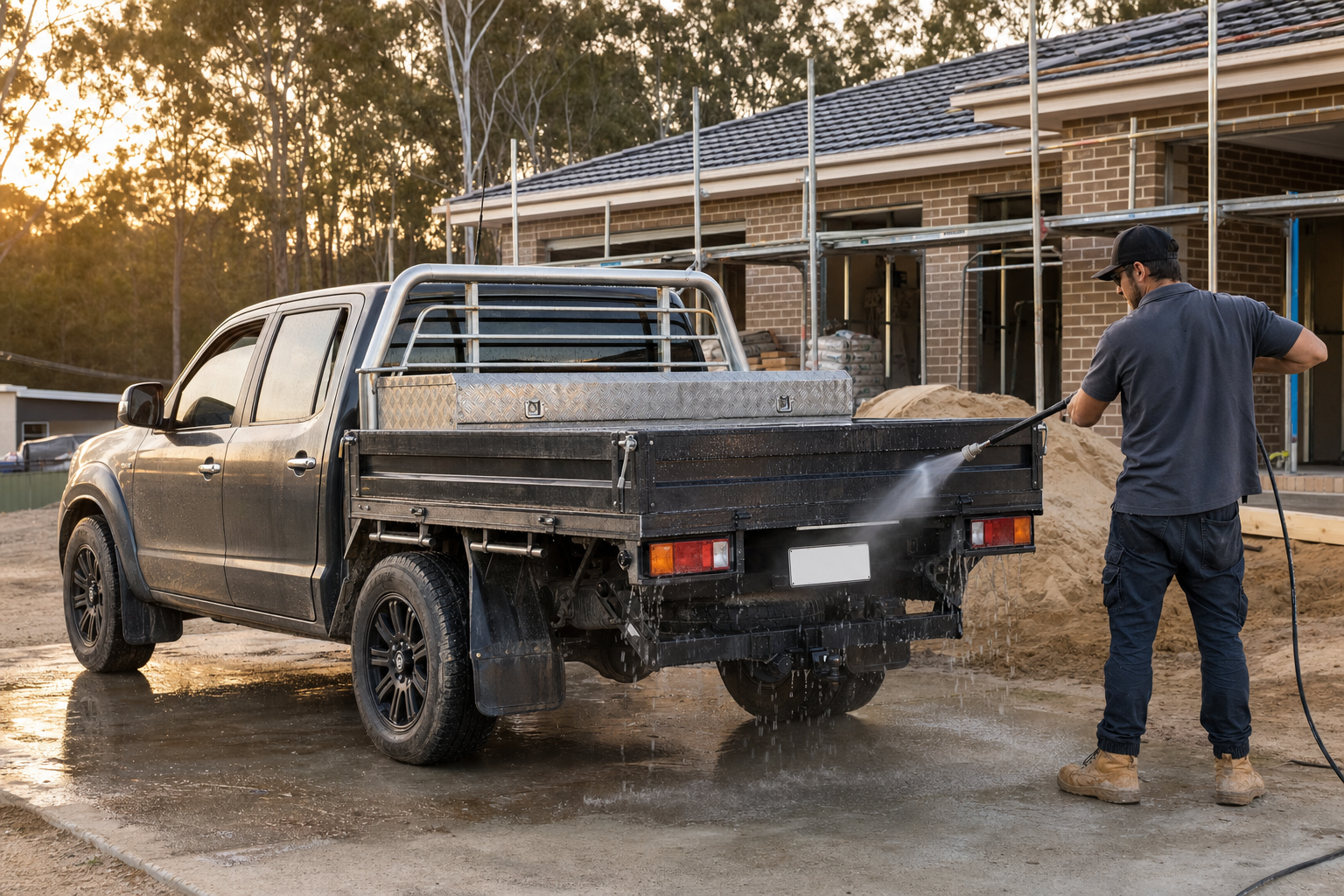
Cement and plaster splatter is one of the trickier things to remove without risking the paint underneath - it needs the right approach rather than just scrubbing, since dried cement in particular is abrasive if handled roughly. A tray or tub also benefits from periodic proper cleaning rather than just hosing off, since built-up grime and moisture sitting in the tray is what leads to corrosion over time, particularly around joins and edges.
How Often Should a Tradie Vehicle Be Detailed
Realistically, this depends on how the vehicle's used, but a reasonable baseline is a quick wash and vacuum every few weeks to keep on top of the day-to-day grime, with a more thorough interior and exterior detail every few months to deal with the buildup a quick clean doesn't touch. Vehicles doing heavier site work - concrete, demolition, landscaping - generally need that deeper clean more often than an electrician or plumber's van, purely due to the type of mess involved.
Scheduling Around Work
The obvious upside of mobile detailing for a trade vehicle is not having to lose a day off the tools to sit at a car wash. Bookings can be worked around job schedules - early morning before you head out, or on a day off - and since we come to you, it fits around the work rather than the other way around.
If you're running a work vehicle around Campbelltown, Camden, Narellan, or anywhere across Macarthur and it's overdue for a proper clean-out, book a detail and we'll work around your schedule.